<- back

22 to 26 

March 2026

Santiago, Chile

Workshops - Co-located with ISSTT 2026

This workshop is part of a unique collaboration between Chile and Sweden, focusing on advancing radio astronomy and the application of metasurfaces in space research.

Event Details:
Dates: March 22-26, 2024
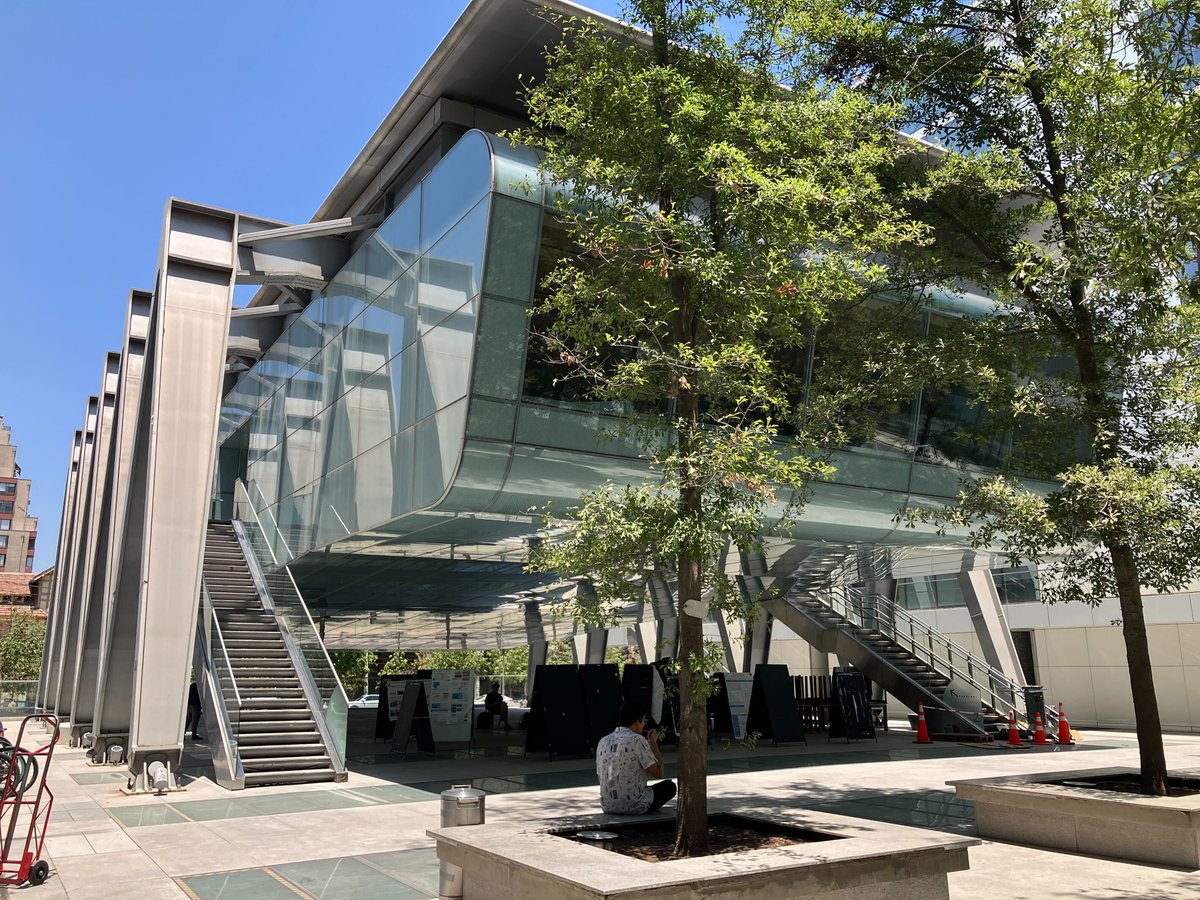
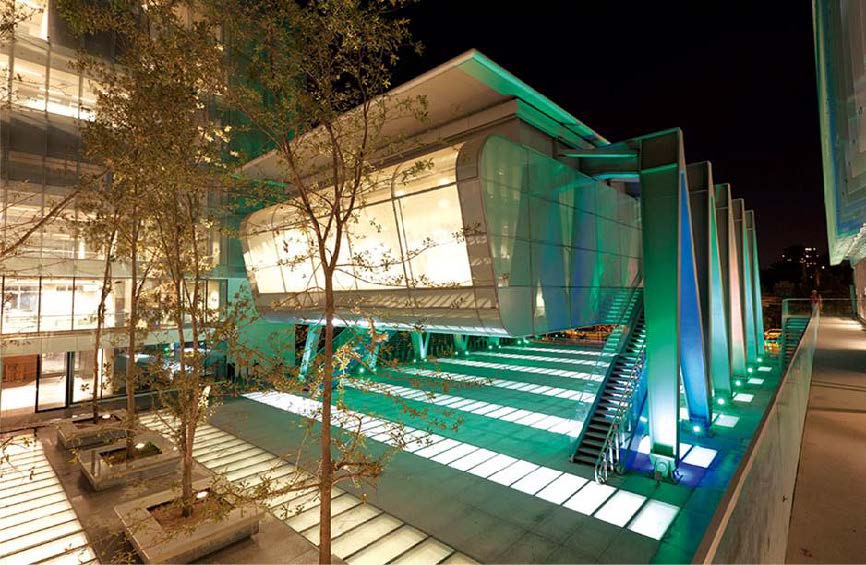
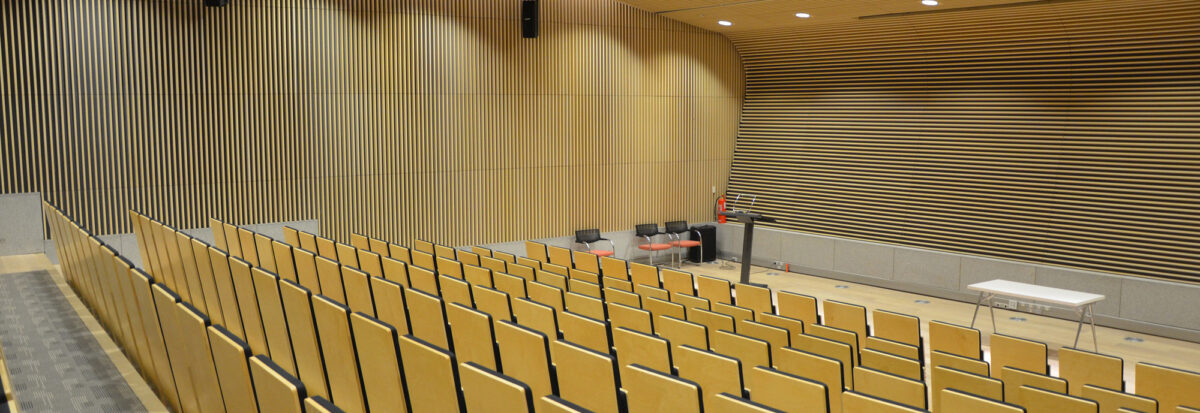
Venue: Auditorio D’Etigny FCFM , Universidad de Chile

image 1
image 2
image 3
image 4

Organizers

Francisco Pizarro Torres

Pontifical Catholic University of Valparaíso

Contact: francisco.pizarro.t@pucv.cl

Óscar Quevedo-Teruel

KTH, Sweden

Principal Investigator
STINT METAFORA project                                            

PROGRAM

Program — March 26

08:30 09:00

Registration

09:00 09:10

Opening 1

Francisco Pizarro
09:10 09:20

Opening 2

Oscar Quevedo
09:20 10:10
Invited Talk

Equivalent Circuits: A Convenient Approach to Study Metasurfaces

Francisco Mesa
10:10 10:20

Coffee Break

10:20 12:20
Metasurface Short Course

Metasurfaces and Periodic Structures: Theory, Analysis, and Design Tools

Nelson Castro & Oskar Zetterström
12:20 13:00
Invited Talk

Electromagnetic Metasurfaces for Radio Frequency Interference Mitigation and Sensing

Sean Hum
13:00 13:50

Lunch Break

13:50 14:30
Invited Talk

Ultra-Wideband Geodesic Horn Antenna

Cristina Yepes
14:30 15:10
Invited Talk

Local and Non-Local Methods for RLSA Design

Agnese Mazzinghi
15:10 15:50
Invited Talk

Monolithic Additive Manufacturing of High-Frequency RF Components: From Space Communications to Radio Astronomy

Jose Rico
15:50 16:00

Closing

Speakers – March 26

Keynote Speakers

Portrait of Sean Victor Hum University of Toronto

Sean Victor Hum

Professor and Eugene V. Polistuk Chair in Electromagnetic DesignUniversity of Toronto

Title of the talk

Electromagnetic Metasurfaces for Radio Frequency Interference Mitigation and Sensing

Radio frequency interference (RFI) is a serious problem facing radio astronomy. While traditionally RFI has been mitigated through preventative measures, data processing, and so forth, more proactive approaches are now required. In particular, the proliferation of massive constellations of low-Earth orbit satellites for telecommunications (Starlink, Project Kuiper, etc.) has necessitated the need for techniques to mitigate spaceborne sources of RFI.

Concurrently, broadband sensing of terrestrial sources of RFI at observatory sites can guide mitigation schemes. Electromagnetic metasurfaces have a unique role to play here, and the presentation will share two unique applications of metasurfaces. The first is using metasurfaces to implement reconfigurable surfaces to enable spatial filtering of spaceborne RFI. The second is the use of metasurface-inspired leaky-wave antennas to implement broadband RFI sensors that can also sense the precise direction of arrival of the RFI source(s).

Finally, the presentation will share an interesting opportunity to leverage purposeful spaceborne emissions for the purposes of radio telescope calibration.

Speaker bio

Sean Victor Hum received the B.Sc., M.Sc., and Ph.D. degrees in electrical and computer engineering from the University of Calgary, Canada, in 1999, 2001, and 2006, respectively.

In 2006, he joined The Edward S. Rogers Sr. Department of Electrical and Computer Engineering, University of Toronto (UofT), Canada, where he is currently a Professor and the Eugene V. Polistuk Chair in Electromagnetic Design. In 2014 he was a visiting scientist with the European Space Agency at ESTEC, in Noordwijk, The Netherlands, and then a visiting professor at Universidad Politécnica de Madrid (UPM). He was the Associate Chair, Graduate Studies in the same department, from 2018-2021.

He leads the RADIANCE laboratory, and along with his students, conducts research in the areas of advanced electromagnetic surfaces, reconfigurable antennas, and antennas for space applications. His recent work in aerospace antennas has been supported by numerous industry partners, including MDA, Thales, and Kepler Communications, as well as the European Space Agency.

He received the ASTech Leaders of Tomorrow Award in 2006, and the Early Researcher Award from the Government of Ontario in 2012. He has received seven teaching awards at the UofT, including the Northrop Frye Award in 2024. He was a co-recipient of the IEEE Antennas and Propagation Society R. W. P. King Award in 2015 and 2017. He was an Associate Editor of the IEEE Transactions on Antennas and Propagation from 2010-17.

Cristina Yepes

Antenna Scientist InnovatorTNO Defense, Safety and Security

Title of the talk

Ultra-Wideband Geodesic Horn Antenna

The increasing demand for wider bandwidths in next-generation communication systems has driven the migration toward higher frequency bands to support 5G and emerging 6G networks. Antennas operating in these bands must provide ultra-wideband performance, high gain, and stable radiation characteristics across the entire frequency range.

While graded-index lens antennas offer effective beam focusing, their performance is often limited by dielectric losses. Geodesic lenses provide an alternative approach by emulating graded refractive index profiles through equivalent geometrical paths, enabling fully metallic implementations in parallel plate waveguides and significantly reducing material losses.

This work presents the design and fabrication of an ultra-wideband feed system integrated with a geodesic horn antenna. The proposed feed consists of a ridge-to-parallel plate waveguide transition operating from 10 to 40 GHz. The lens profile is optimized using an in-house ray-tracing model, and an array of radiating flares is incorporated to enhance E-plane gain.

The structure is adapted for monolithic additive manufacturing to minimize leakage and alignment errors. The results demonstrate the potential of geodesic antennas as efficient ultra-wideband solutions for point-to-point communication systems.

Speaker bio

Cristina Yepes (Member, IEEE) received the M.Sc. degree in Telecommunication Engineering from the University of Navarra, Navarra, Spain, in 2015, and the joint Ph.D. degree in Electrical Electromagnetics from Delft University of Technology, Delft, The Netherlands, and the Radar Department, Netherlands Organization for Applied Scientific Research (TNO) Defense, Safety and Security, The Hague, The Netherlands, in 2020.

She was a Postdoctoral Researcher with the University of Siena, Siena, Italy, from 2020 to 2021, and the Public University of Navarra, Navarra, from 2021 to 2022. Since 2022, she has been an Antenna Scientist Innovator with the Antenna Group, TNO Defense, Safety and Security.

Her current research interests include analysis and design techniques for phased array antennas and frequency-selective surfaces, analytical and numerical methods for antenna characterization, metasurfaces, and metalenses.

Dr. Yepes is a member of the Committee of the IEEE AP-S Young Professionals and co-chair of the IEEE YP Funding. She was a co-recipient of the Best Innovative Paper Prize at the 39th ESA Antenna Workshop in 2018. In 2022, she received the Post-Doctoral Fellowship "Juan de la Cierva" from the Public University of Navarra. She is the Treasurer, the Secretary and a Board Member of the European School of Antennas and Propagation (ESoA) under the umbrella of EurAAP.

Portrait of Pepe Rico-Fernandez Northern Waves AB

Pepe Rico-Fernandez

CEO and FounderNorthern Waves AB

Title of the talk

Monolithic Additive Manufacturing of High-Frequency RF Components: From Space Communications to Radio Astronomy

The increasing demand for high-frequency systems in satellite communications, deep-space missions, 6G infrastructure and radio astronomy requires RF hardware with higher integration density, improved robustness and reduced assembly complexity.

Traditional manufacturing approaches based on multi-part CNC machining introduce alignment tolerances, leakage risks and mechanical interfaces that become critical at millimeter-wave frequencies. This presentation explores the use of fully metallic Laser Powder Bed Fusion (LPBF) for the realization of monolithic RF components including horns, filters, polarizers, orthomode transducers and integrated front-end assemblies.

Emphasis is placed on design methodologies that leverage additive manufacturing constraints while preserving electromagnetic performance. Several case studies will be presented, demonstrating the integration of multiple RF functionalities into single-piece architectures, reducing mass, eliminating fasteners and improving repeatability.

The implications for high-frequency scientific instrumentation and space-qualified hardware will be discussed, including considerations related to surface roughness, dimensional tolerances, thermal stability and vacuum compatibility. The talk will conclude with a perspective on how additive manufacturing is reshaping the design paradigm of millimeter-wave hardware, enabling new architectures that were previously impractical with conventional processes.

Speaker bio

Dr. Pepe Rico-Fernandez is the CEO and Founder of Northern Waves AB, a Swedish deep-tech company specialized in fully metallic additive manufacturing of high-frequency microwave and millimeter-wave components.

He obtained his PhD in 2024 through an international collaboration between the University of Oviedo, KTH Royal Institute of Technology and the European Space Agency (ESA). He has over eight years of experience in additive manufacturing for RF systems, previously working at ArcelorMittal Global R&D in advanced manufacturing technologies.

He currently leads multiple ESA and industrial programs focused on monolithic RF hardware for satellite communications, 6G systems, defense applications and radio astronomy instrumentation. His work focuses on enabling compact, lightweight and highly integrated components operating up to Q/V and W bands through design-for-additive-manufacturing methodologies.

Portrait of Agnese Mazzinghi Keynote Speaker

Agnese Mazzinghi

Title of the talk

Local and Non-Local Methods for RLSA Design

This contribution illustrates the evolution in designing Radial Line Slot Arrays (RLSAs), starting from the local approach, where slot length and positions are determined using a periodic model, to the non-local approach, where the slots act as independent radiating elements creating a non-uniform aperture current distribution.

It then revisits the local approach with the development of a new metasurface version of RLSA. The benefits and limitations of each method will be discussed.

Portrait of Francisco Mesa Keynote Speaker

Francisco Mesa

Title of the talk

Equivalent Circuits: A Convenient Approach to Study Metasurfaces

The study of metasurfaces is currently dominated by commercial full-wave simulators. While powerful, these tools require significant computational resources and primarily yield numerical or graphical outputs. Extracting physical insight from such data is notoriously difficult, often relying more on a researcher's intuition than on systematic analysis.

Conversely, substantial effort has been directed toward developing equivalent circuits (ECs) to provide a more direct understanding of the underlying physical phenomena. However, these models frequently serve as empirical curve-fitting solutions that mimic observed behavior over a limited frequency range, lacking a rigorous connection to the underlying physics.

Consequently, the derivation of these ECs remains largely subjective and dependent on the designer's experience. In this talk, we propose a methodology for deriving ECs to characterize the electromagnetic behavior of metasurfaces directly from fundamental principles and Maxwell's equations.

The resulting minimal-order models remain valid across a broad frequency range. Through this rigorous theoretical foundation and the inherent simplicity of circuit theory, physical meaning emerges naturally. This approach not only clarifies the operation of metasurfaces but also leads to highly efficient numerical tools for the analysis and design of complex metasurface-based structures.