Prof. Oscar Quevedo-Teruel
Communication Systems
School of Electrical Engineering and Computer Science
KTH Royal Institute of Technology
Communication Systems
School of Electrical Engineering and Computer Science
KTH Royal Institute of Technology
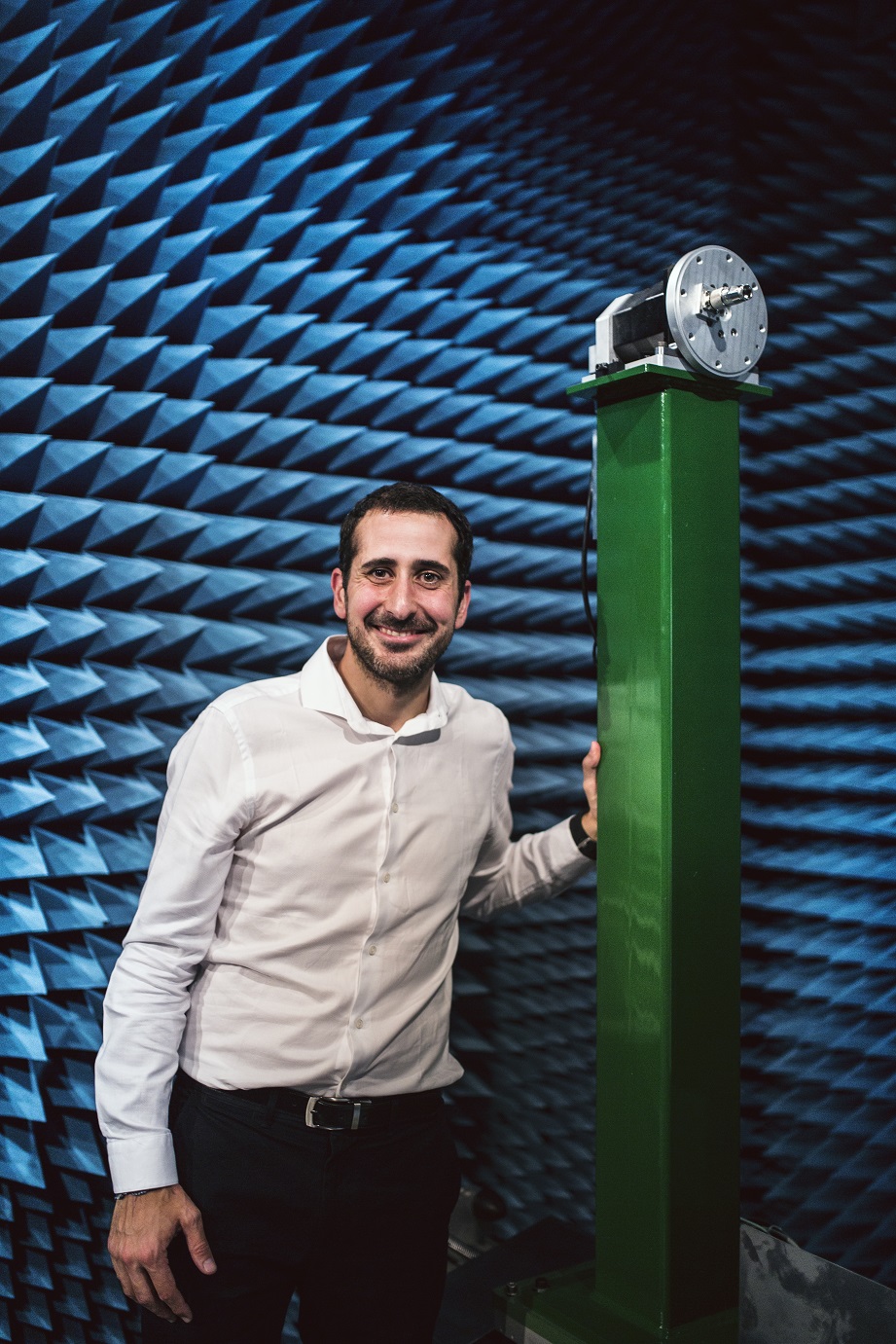
Oscar Quevedo-Teruel received his Telecommunication Engineering and Ph.D. Degrees from Carlos III University of Madrid, Spain in 2005 and 2010.
In 2014, he joined the KTH Royal Institute of Technology (Stockholm, Sweden), where he is presently a Full Professor in the Department of Communication Systems in the School of Electrical Engineering and Computer Science. He is also the responsible for the Antenna Laboratory and Director of the Master Programme in Electromagnetics Fusion and Space Engineering.
He was a distinguished lecturer of the IEEE Antennas and Propagation Society for the period of 2019-2022. He is an IEEE Fellow for his contributions to glide symmetry based metasurfaces and lens antennas. He has been a member of the EurAAP Board of Directors since January 2021. Since January 2022, he is presently the EurAAP vice-chair.
He was an Associate Editor of the IEEE Transactions on Antennas and Propagation since 2018-2022, and he acts as Track Editor in IEEE TAP since 2022. He is the founder and editor-in-chief of the EurAAP journal Reviews of Electromagnetics since 2020.
He has made scientific contributions to periodic structures with higher symmetries, lens antennas, metasurfaces, physical optics and ray tracing. He is the co-author of more than 160 papers in international journals and more than 250 at international conferences.
PART 1: INTRODUCTION
More videos:
PART 2: HOMOGENEOUS LENSES: SPHERICAL LENSES
PART 3: HOMOGENEOUS LENSES: NON-SPHERICAL
PART 4: LIMITATIONS: ABERRATIONS AND REFLECTIONS
PART 5.1: GRADED INDEX LENSES
PART 5.2: GRADED INDEX LENSES
PART 6: NEW TECHNIQUES: TRANSFORMATION OPTICS AND METASURFACES
Authors: A. Algaba-Brazalez, P. Castillo-Tapia, M. C. Vigano, O. Quevedo-Teruel
Journal: IEEE Communications Magazine, 2024

Title: 2D Ray Tracing Model for Multilayer Dielectric Dome Arrays with Inner Reflections
Authors: M. Pubill, F. Mesa, A. Algaba-Brazalez, S. Clendinning, M. Johansson, O. Quevedo-Teruel
Journal: IEEE Open Journal of Antennas and Propagation, 2024

Authors: P. Castillo-Tapia, O. Zetterstrom, A. Algaba-Brazalez, L. Manholm, M. Johansson, N. J. G. Fonseca, O. Quevedo-Teruel
Journal: IEEE Transactions on Antennas and Propagation, 2023
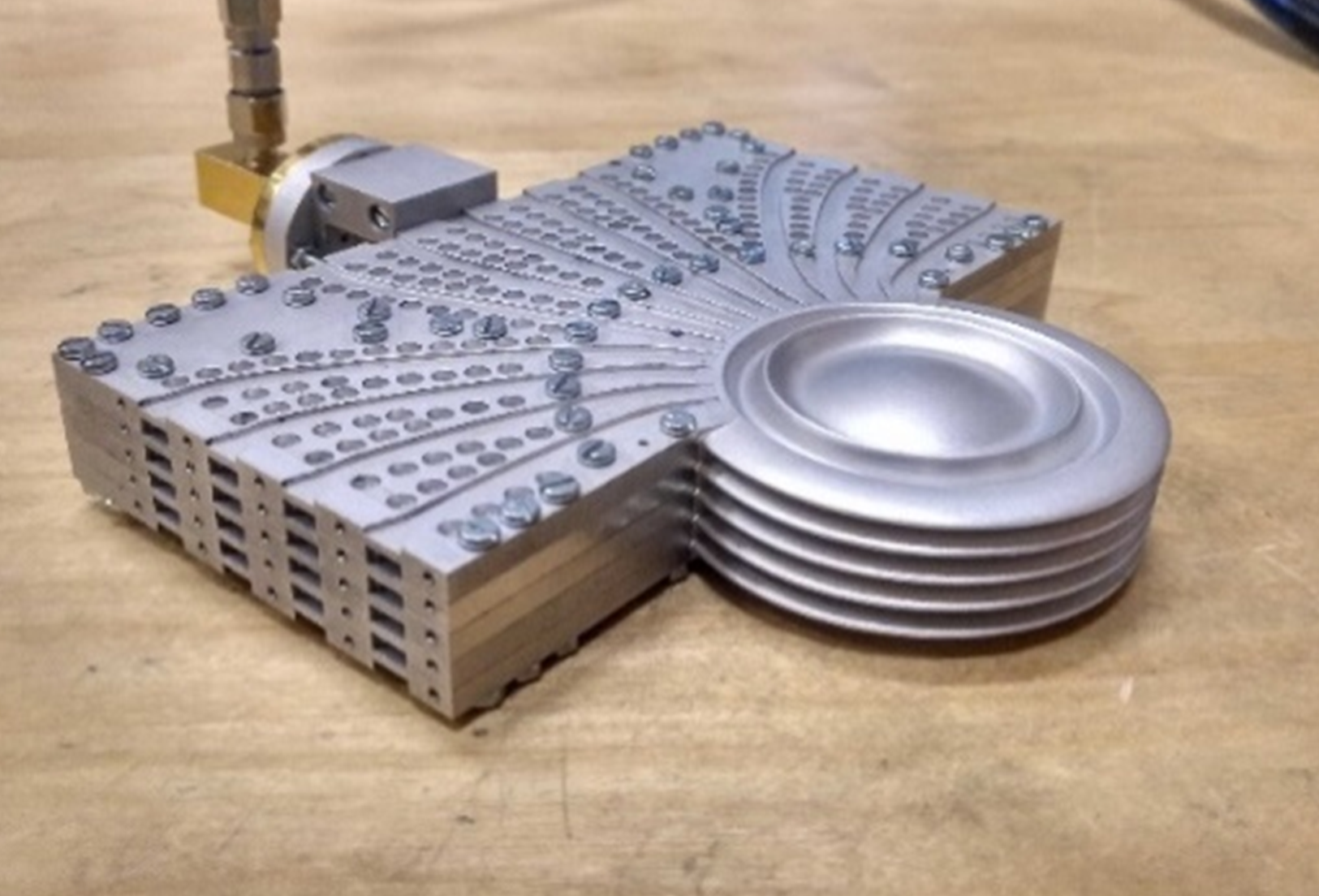
Title: Glide-symmetric fully-metallic Luneburg lens for 5G Communications at Ka-band
Authors: O. Quevedo-Teruel, J. Miao, M. Mattsson, A. Algaba-Brazalez, M. Johansson, L. Manholm
Journal: IEEE Antennas and Wireless Propagation Letters, 2018
Communication Systems
School of Electrical Engineering and Computer Science
KTH Royal Institute of Technology
Malvinas väg 10
SE-11428 Stockholm
Sweden
Phone:
+46 72-844 41 64
E-mail:
oscarqt@kth.se